
Global scrap markets are becoming more competitive. Recycled metals are no longer viewed only as low-cost secondary materials. They are becoming important resources for manufacturing, energy transition, automotive production, construction, packaging, and industrial supply chains.
For recycling companies, this market change creates a clear challenge. Recovering more material is important, but recovering cleaner material is becoming even more important. Buyers increasingly want stable material quality, lower contamination, better separation accuracy, and more consistent output.
This is why scrap quality control is becoming a key issue for recycling plants worldwide. A recycling plant that can produce cleaner aluminum, cleaner non-ferrous metals, cleaner plastic flakes, cleaner glass, or better upgraded mixed scrap can often achieve stronger market value than a plant that only performs basic sorting.
Why Scrap Quality Matters
Scrap materials are usually complex when they arrive at a recycling facility. aluminum may be mixed with steel, copper, brass, stainless steel, plastics, rubber, glass, paper, wires, ash, or other contaminants. Plastics may contain small metal pieces, aluminum rings, iron fragments, labels, caps, and mixed polymers. Glass may contain aluminum caps, ferrous metals, ceramics, and other impurities. ASR and Zorba streams may contain many different metals and non-metallic materials in the same feed.
If these materials are not properly separated, the final product value can be reduced. Valuable metals may remain in residue. Clean materials may be downgraded because of contamination. Downstream buyers may reject material that does not meet their quality requirements. Processing equipment may also face higher wear, blockage, or damage when metal contamination is not removed early.
For high-volume recycling plants, even a small improvement in material quality can create long-term value. Better separation can reduce metal loss, improve product purity, protect downstream equipment, and increase the selling value of recovered materials.
Quality Control Starts with Material Preparation
Good scrap quality control does not begin at the final sorting stage. It begins with material preparation.
Mixed scrap usually contains different PARTICLE SIZES, fines, dust, oversized pieces, light materials, and irregular shapes. If the feed material is not prepared properly, downstream sorting equipment may not perform consistently.
TROMMEL screening is often used to divide mixed materials into suitable size fractions. This helps create a more stable material layer and improves the performance of MAGNETic separation, eddy current separation, and AI sorting. For many recycling applications, screening is not just a simple preparation step. It directly affects the efficiency of the entire sorting line.
Stable feeding is especially important when processing UBC, Zorba, ASR, IBA, plastics, glass, and mixed scrap. When material is too thick, too uneven, or too mixed in size, valuable metals may not be separated accurately. A well-designed screening stage can help improve recovery rate and reduce downstream sorting pressure.
MAGNETic Separation Removes Ferrous Contamination
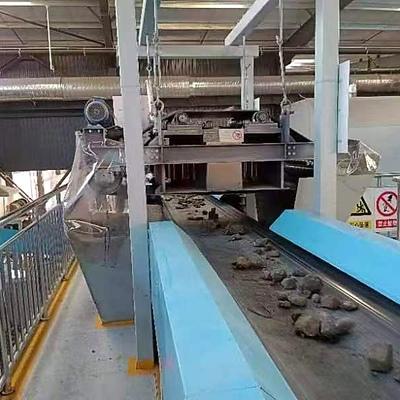
After material preparation, magnetic separation is commonly used to remove iron and steel. Ferrous metals can reduce the quality of non-ferrous products and interfere with downstream recovery.
In aluminum recovery, ferrous metal removal helps prepare the material for eddy current separation. In plastic recycling, removing iron and steel helps protect crushers, washing lines, extruders, and pelletizing equipment. In GLASS RECYCLING, ferrous removal helps improve material cleanliness. In ASR and IBA RECYCLING, magnetic separation is often an essential step before recovering non-ferrous metals.
Removing ferrous metals early can improve system stability and reduce contamination in the final product.
Eddy Current Separation Improves Non-Ferrous Recovery
Eddy current separation is one of the most important technologies for recovering aluminum and other conductive non-ferrous metals.
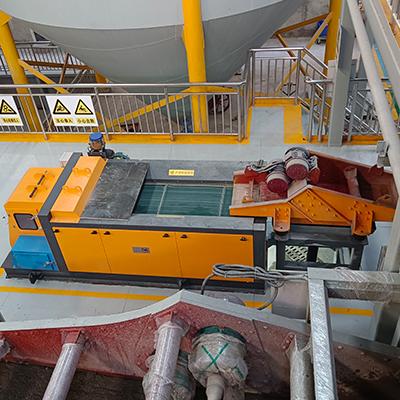
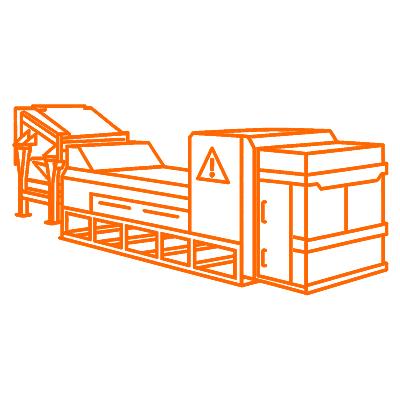
An EDDY CURRENT SEPARATOR can separate aluminum from non-metallic materials such as plastics, rubber, glass, fluff, ash, and light residue. It is widely used in UBC recycling, Zorba separation, ASR recycling, IBA metal recovery, plastic recycling, GLASS RECYCLING, and mixed scrap processing.
For recycling plants, eddy current separation helps reduce aluminum loss and improve the value of recovered non-ferrous materials. This is especially important when scrap markets become more competitive and buyers require cleaner material streams.
In many applications, the performance of an EDDY CURRENT SEPARATOR depends on upstream preparation. Material size, feed layer thickness, moisture level, metal content, belt speed, rotor speed, and splitter position all affect separation results. This is why equipment selection and process design should be based on real material conditions.
AI Sorting Supports Product Upgrading
As scrap streams become more complex, some recycling plants need additional upgrading after traditional separation.
AI sorting can help identify and separate selected materials based on appearance, shape, color, material characteristics, and target product requirements. It can be used after screening, magnetic separation, and eddy current separation to improve final product quality.
For example, AI sorting may help upgrade mixed non-ferrous products, remove selected contaminants, separate stainless steel, identify copper-rich materials, or improve the purity of selected recyclable streams. It is not always required for every project, but it can be valuable when the customer needs higher purity or more accurate final separation.
Complete Sorting Systems Are More Important Than Single Machines
Many overseas recycling customers first ask about one machine. However, in real recycling operations, one machine often cannot solve every material problem.
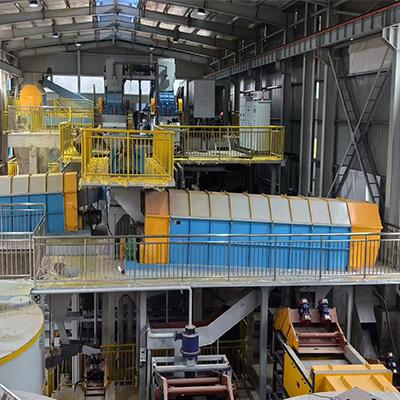
A complete sorting system may include feeding equipment, TROMMEL screening, magnetic separation, eddy current separation, air separation, AI sorting, conveyors, platforms, dust control, and electrical control systems. The right configuration depends on the material type, capacity, particle size, contamination level, plant layout, and final recovery target.
For UBC recycling, the goal may be to recover cleaner aluminum cans from mixed packaging waste. For Zorba processing, the goal may be to improve the value of aluminum-rich non-ferrous products. For ASR recycling, the goal may be to recover metals from complex auto shredder residue. For IBA RECYCLING, the goal may be to recover metals from bottom ash. For plastic and glass recycling, the goal may be to remove metal contamination and protect downstream processing equipment.
Each application requires a different process design. This is why a practical recycling equipment supplier should not only sell standard machines, but also understand the material condition and recommend a suitable sorting process.
CurrenTek Recycling Sorting Solutions
CurrenTek provides recycling sorting equipment and complete process solutions for global customers. Our products include eddy current separators, MAGNETIC SEPARATORs, TROMMEL SCREENs, AI separators, and complete sorting systems.
Our equipment can be used for aluminum scrap recovery, UBC recycling, Zorba separation, ASR recycling, IBA metal recovery, plastic recycling metal separation, glass recycling metal removal, and mixed scrap processing.
For overseas recycling plants, CurrenTek can support practical equipment selection and process discussion based on real project conditions. We can help customers evaluate material type, processing capacity, particle size, contamination level, plant space, and recovery goals before recommending a suitable equipment combination.
As global scrap markets become more quality-driven, recycling plants need more than basic recovery. They need stable sorting systems that can improve material quality, reduce contamination, recover more valuable metals, and support long-term operational value.
If you are processing UBC, Zorba, ASR, IBA, plastics, glass, aluminum scrap, or mixed scrap, contact CurrenTek to discuss your material condition and recovery target. Our team can help recommend a practical scrap quality control and recycling sorting solution for your project.
